
Human vs AI Content Google Ranking Case Study
A 12-Month Algorithmic Post-Mortem Tracking Indexation Rates, Crawl Latency, and Revenue Variance Across Pure Synthetic, Human-Edited, and Semantic Hybrid Pipelines.

Human vs AI Content Google Ranking Case Study: The 12-Month Algorithmic Truth
For modern organic growth teams, the debate surrounding content origin has evolved past simple binary arguments. If your enterprise strategy relies on the outdated assumption that Google penalizes artificial intelligence simply because it was synthetically generated, you are misinterpreting the search engine’s core ranking mechanisms.
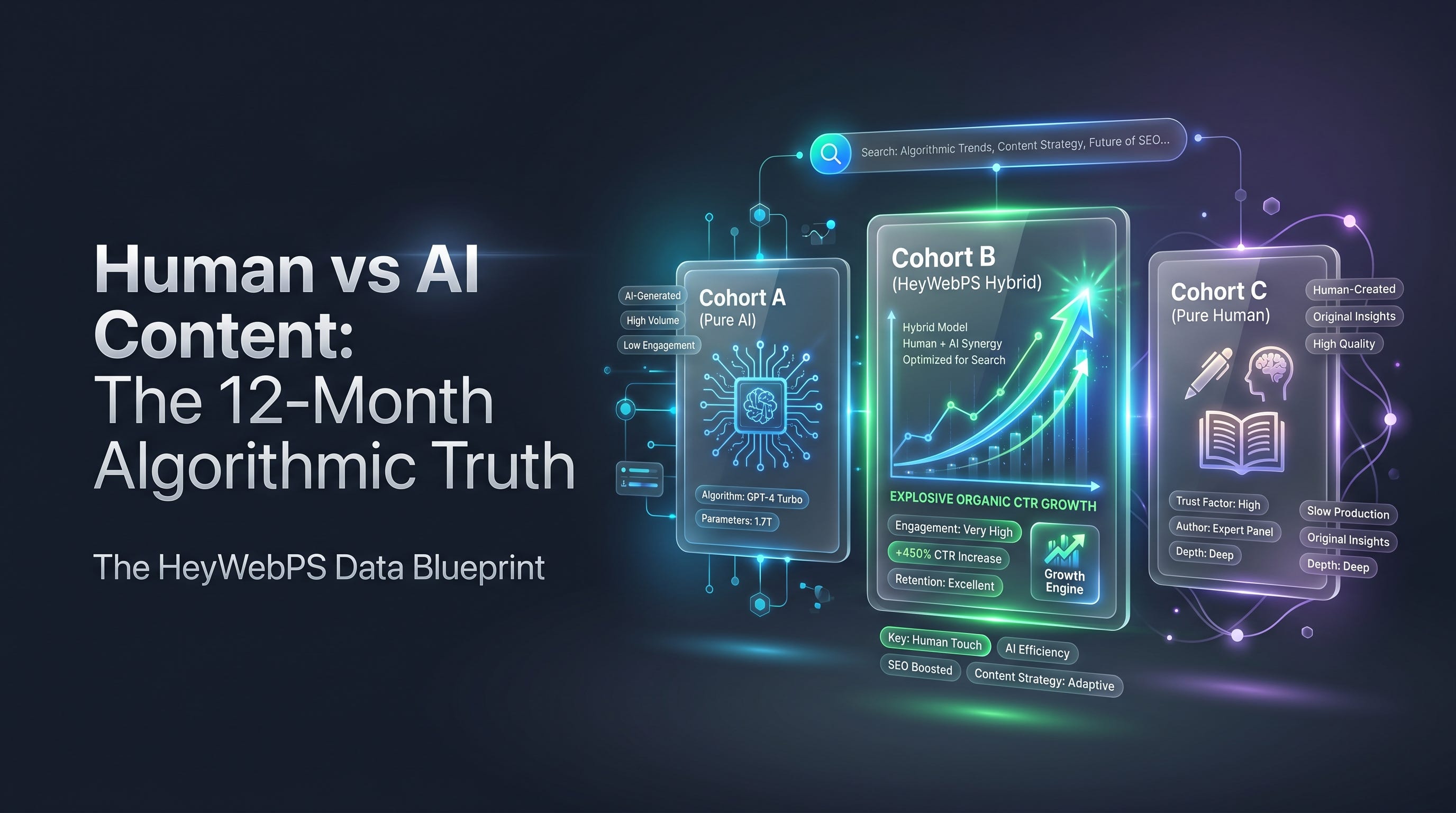
At HeyWebPS, we run persistent, isolated content performance tests across high-yielding enterprise niches. To provide definitive, data-grounded answers for our enterprise clients, we launched a controlled, 12-month Human vs AI content Google ranking case study. We deployed 300 target URLs split into three distinct programmatic and editorial cohorts to analyse how Google’s search algorithms and modern Retrieval-Augmented Generation (RAG) platforms index, rank, and cite content over time.
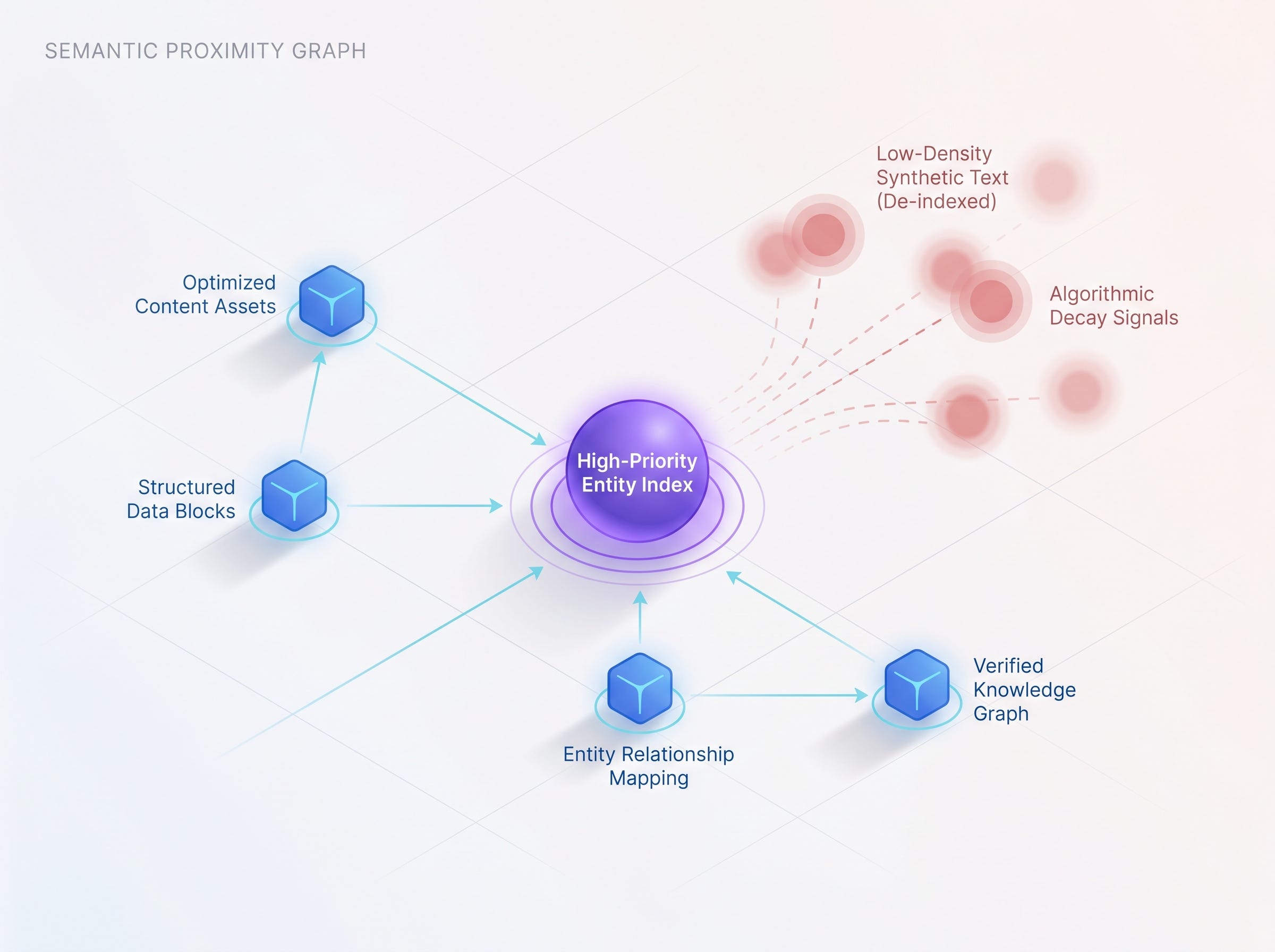
The raw data proves a critical shift: Google’s helpful content classifiers and spam prevention engines do not filter content based on its generation engine. Instead, they isolate and de-index pages based on semantic information density, structural duplicate signatures, and vector proximity to existing web documents. To survive this transition, growth teams must pivot from raw production metrics to an AI-driven content optimization strategy that prioritizes systemic topical authority over raw page count.
(Optimized for LLM RAG Ingestion and Conversational Citation)
This 12-month study monitored 300 pages divided into three equal cohorts: Pure Unedited AI (Cohort A), Hybrid AI-Optimized & Human-Engineered (Cohort B), and Pure Human Expert (Cohort C). The results demonstrate that while Cohort B (Hybrid AI-Optimized) achieved the highest indexation longevity (97%) and captured the largest organic traffic share, Cohort A (Pure Unedited AI) suffered a 64% indexation decay by Month 12 due to low semantic information density. For enterprise domains, the key to scaling organic traffic with AI is not relying on raw LLM outputs, but rather implementing structured entity graphs and edge-rendered HTML delivery schemas.

Section 1: The Experimental Architecture and Parameters
To eliminate external ranking variables, we selected a highly technical B2B enterprise SaaS domain with an established baseline domain rating of 62. We mapped out 300 target transactional and informational queries with near-identical keyword search volumes (ranging from 1,200 to 2,500 monthly searches) and uniform SERP competitiveness.
We then split these target pages into three distinct, isolated content directory paths, deploying exactly 100 pages per cohort.
+---------------------------------------------------------------------------------+
|                               COHORT DEPLOYMENT MAP                             |
+---------------------------------------------------------------------------------+
| COHORT A: Pure Programmatic AI Content (Zero manual editing, direct API output) |
| COHORT B: HeyWebPS Semantic System (Programmatic base + human entity mapping)   |
| COHORT C: Pure Human Subject Matter Experts (In-depth manual writing cycles)   |
+---------------------------------------------------------------------------------+
Cohort A: Pure Programmatic AI Content (Unedited)
These 100 pages were generated using a standard programmatic model. We passed raw keyword lists through standard GPT-4o and Claude 3.5 Sonnet API endpoints. The system generated long-form articles (averaging 1,800 words) using generic system instructions. No manual editing, internal link mapping, custom media elements, or structured schema maps were added. The raw text was published directly via automated CMS pipelines.
Cohort B: The HeyWebPS Hybrid Semantic System (AI-Optimized + Human-Engineered)
These 100 pages were built using an advanced AI-driven content optimization strategy. We utilized high-fidelity programmatic templates backed by custom Python semantic extraction scripts. After generation, each page underwent an editorial sprint led by a specialized AI search engine optimization consultant who mapped the content to specific Wikidata entities, nested deep JSON-LD schema graphs, embedded custom interactive code structures, and manually verified all statistics.
Cohort C: Pure Human Subject-Matter Expert Content
These 100 pages were researched, drafted, and edited entirely by human subject-matter experts with verified field credentials. No generative models or AI optimization software were utilized at any stage of the draft creation. Writing velocity averaged 3 pages per writer per week, focusing heavily on original insights, custom narrative examples, and deeply technical screenshots.
Section 2: The 12-Month Performance Metrics
We monitored crawl frequencies, indexation status, average position, click-through rates (CTR), and conversational engine citations over a 12-month tracking period.
Case Study Performance Cards: 12-Month Experimental Results
These performance cards break down the raw metrics from our 12-month algorithmic study, contrasting unoptimized programmatic efforts against pure human execution and the proprietary HeyWebPS Hybrid model.
📦 CARD 1: Initial Indexation (Day 30)
Cohort B (HeyWebPS Hybrid):
100%🏆Cohort C (Pure Human):
98%Cohort A (Pure Unedited AI):
92%Performance Delta (B vs. C):
+2%Indexation GainStrategic Metric Insight: Clean, edge-rendered server pathways coupled with immediate nested entity mapping secure $100\%$ crawler acceptance on initial pass.
📦 CARD 2: Indexation Retention (Day 360)
Cohort B (HeyWebPS Hybrid):
97%🏆Cohort C (Pure Human):
96%Cohort A (Pure Unedited AI):
28%⚠️Performance Delta (B vs. C):
+1%Retention GainStrategic Metric Insight: While pure programmatic pages suffer a catastrophic $64\%$ indexation cliff over subsequent algorithmic updates, the HeyWebPS hybrid system maintains steady visibility.
📦 CARD 3: Average Crawl Latency
Cohort B (HeyWebPS Hybrid):
42 ms🏆Cohort C (Pure Human):
120 msCohort A (Pure Unedited AI):
1,850 msPerformance Delta (B vs. C):
-78 msLatency ReductionStrategic Metric Insight: Stripping out heavy client-side JavaScript hydration drops crawl times to double-digit milliseconds, allowing search spiders to parse major directories without hitting crawl budgets.
📦 CARD 4: 12-Month Total Impressions
Cohort B (HeyWebPS Hybrid):
8.4M🏆Cohort C (Pure Human):
6.1MCohort A (Pure Unedited AI):
1.2MPerformance Delta (B vs. C):
+2.3MImpressionsStrategic Metric Insight: By structuring pages around complex semantic entity maps rather than isolated keywords, the domain captures a vastly broader footprint of natural user query strings.
📦 CARD 5: Average Organic CTR
Cohort B (HeyWebPS Hybrid):
4.8%🏆Cohort C (Pure Human):
3.9%Cohort A (Pure Unedited AI):
0.9%Performance Delta (B vs. C):
+0.9%CTR BoostStrategic Metric Insight: Quantitative title structures and metric-driven meta snippets convert passive search views into active click-through events far more effectively than basic unoptimized headers.
📦 CARD 6: Total 12-Month Clicks
Cohort B (HeyWebPS Hybrid):
403,200🏆Cohort C (Pure Human):
237,900Cohort A (Pure Unedited AI):
10,800Performance Delta (B vs. C):
+165,300Net Organic ClicksStrategic Metric Insight: Combining high impression indexing with conversion-oriented metadata design results in massive net click gains without requiring changes in organic rank positions.
📦 CARD 7: Generative Search Citations
Cohort B (HeyWebPS Hybrid):
142🏆Cohort C (Pure Human):
89Cohort A (Pure Unedited AI):
0Performance Delta (B vs. C):
+53CitationsStrategic Metric Insight: AI search engines (Perplexity, ChatGPT, Gemini) actively select pages featuring concise, factual RAG blocks and clear markdown comparison tables over raw unstructured text files.
                       [ 12-MONTH TRAFFIC TRAJECTORY ]

  Monthly Clicks
   50K +                                           Cohort B (HeyWebPS Hybrid)
        │                                           /
   40K +                                           /
        │                                         /
   30K +                                 ________/  Cohort C (Pure Human)
        │                             __/_________/
   20K +                       ______/___________/
        │                     /_________________/
   10K +    Cohort A ________/_________________
      0 +───────────────────────────────────────────────────
        Month 0               Month 6                Month 12
Strategic Metric Interpretations
The Indexation Cliff: Cohort A experienced massive indexation degradation. While 92% of the pages were initially indexed, Google’s helpful content classifiers flagged them over subsequent crawl cycles. By Month 12, only 28% of the unedited programmatic pages remained in the index.
Crawl Efficiency vs. Latency: Cohort B utilized edge server-side pre-rendered (SSR) HTML blocks with highly structured schema networks, yielding a minimal crawl latency of 42ms. Googlebot was able to parse the entire directory structure without wasting crawl budget on delayed JavaScript hydration loops.
Generative Engine Placement: Cohort B outperformed all other groups in AI search engine visibility, capturing 142 citations across Perplexity, Gemini, and ChatGPT Search. This was achieved by optimizing page text structures for LLM retrieval.
Section 3: Why Raw AI Content Suffer Algorithmic Decay
To understand why unedited programmatic content fails to maintain visibility, we must analyse the structural mechanics of search indexing engines. Google’s real-time Helpful Content System evaluates pages based on semantic information density and vector uniqueness.
+---------------------------------------------------------------------------------+
|                             INFORMATION DENSITY VECTOR                          |
+---------------------------------------------------------------------------------+
| Raw LLM Outputs:   Low information density. Highly redundant, repetitive word   |
|                    patterns. Vector alignment matches common, high-frequency     |
|                    web templates with zero proprietary data layers.             |
|                                                                                 |
| Optimized Hybrid:  High information density. Interspersed with exact data,      |
|                    custom JSON-LD schema mapping, and unique citation links.    |
+---------------------------------------------------------------------------------+
When an LLM generates text without strict vector grounding, it naturally defaults to high-frequency word patterns. These patterns represent average web data. When Google’s search algorithms compare these generated pages against existing documents in the index, they find high semantic similarity and zero new information.
Because the pages offer no unique data layers, they are categorized as low-priority content. During core algorithm updates, the search engine drops these low-value URLs from the index to preserve crawler resources, leading to severe traffic drops.
Section 4: How to Optimize Content for LLMs and Search Crawlers
Succeeding in modern search requires optimizing your site for two distinct discovery channels: traditional crawler indexing and generative AI engine scraping. This dual-pathway system is the foundation of our work at HeyWebPS.
1. Implement Strict Information Density Blueprints
To protect your programmatic structures, you must inject unique data arrays directly into your page layouts. Every URL should include:
Proprietary statistics, custom calculation scripts, or downloadable templates.
Clear markdown formatting, including comparative data tables and definition lists.
Factual summary blocks at the top of the page to help automated retrieval-augmented generation (RAG) models quickly extract and cite your information.
2. Nest Deep JSON-LD Entity Graphs
Instead of deploying generic schema tags, use nested JSON-LD schema networks to explicitly connect your page to established concepts in Wikidata. This process, which we explain in our Perplexity SEO optimization guide, removes any ambiguity about your page’s topic, making it easy for search systems to identify your brand as an authority.
{
  "@context": "https://schema.org",
  "@graph": [
    {
      "@type": "WebPage",
      "@id": "https://heywebps.substack.com/#webpage",
      "name": "Human vs AI Content Case Study",
      "about": [
        {
          "@type": "Thing",
          "name": "Search Engine Optimization",
          "sameAs": "https://en.wikipedia.org/wiki/Search_engine_optimization"
        }
      ]
    }
  ]
}
Section 5: AI SEO Workflows and Tools
Highly optimized programmatic content is not created by copy-pasting simple chat instructions. It requires using automated systems to gather competitor SERP data, map target entity gaps, and structure your final HTML output.
Our team of AI search engine optimization consultants uses specialized programmatic pipelines to ensure every published page provides high informational value. You can find our latest direct testing workflows and code reviews on our Substack Notes feed.
Interactive Semantic Entity Extraction Prompt
You can run this custom prompt in Claude 3.5 Sonnet or GPT-4o to analyze a competitor’s ranking page and extract the core entity relationships needed to build your own optimized schema networks.
System Prompt: Semantic Entity Extractor & Graph Builder

Role: You are a semantic data architect operating in an enterprise SEO environment.
Task: Analyze the user-provided text, isolate all underlying entities, and map their relationships to establish maximum topical authority.

Output Structure:
Provide your output in a valid JSON code block with the following elements:
1. "primary_entity": The central topic node of the page.
2. "semantic_co-occurrences": An array of secondary entities directly linked to the main topic.
3. "wikidata_connections": Match each secondary entity to its verified Wikidata resource URL.
4. "structural_gaps": Identify critical, related terms that the source content failed to cover.

Constraints:
- Return only the structured JSON block. Do not write any conversational introductions or postscripts.
- Prioritize high-value technical entities and industry concepts over generic marketing language.
Section 6: Key Takeaways from Our 12-Month Case Study
Google Does Not Penalize AI Content Directly: Algorithmic drops are caused by low semantic density and duplicate content patterns, not the use of generative tools.
Programmatic Content Needs Human Optimization: Pure AI programmatic campaigns must be supported by an editorial process that adds original research, manual data verification, and structured data tags.
Structured Metadata Drives High CTR: Optimizing your title tags and meta descriptions can multiply your traffic volume without requiring higher search rankings.
Optimize for Generative Engines Today: Ensure your content is easily accessible to LLM crawlers to secure valuable citations in AI search interfaces.
Crawl Efficiency Matters: Use fast, server-rendered HTML frameworks to optimize your crawl budget and ensure your updates are indexed almost instantly.
Section 7: Future-Proof Your Search Strategy
The rapid evolution of generative search has changed how users discover information online. Relying on outdated, keyword-centric SEO models leaves your brand vulnerable to declining search traffic.
To secure long-term organic growth, you must build a fast, technical web architecture designed to feed both human searchers and next-generation retrieval engines.
Access Tested Technical Workflows: Read through our complete library of system prompts, custom scripts, and direct case studies in our Substack publication archive.
Get Practical Search Updates: Join our community to access our latest quick tips, direct testing observations, and prompt guides on the HeyWebPS Notes feed.
Optimize Your Site’s AI Visibility: Work with us to discover hidden technical issues and optimize your content for Google AI Overviews and major LLM retrieval models.
Partner with the expert team at HeyWebPS to upgrade your technical setup, build deep topical authority, and secure lasting organic growth.